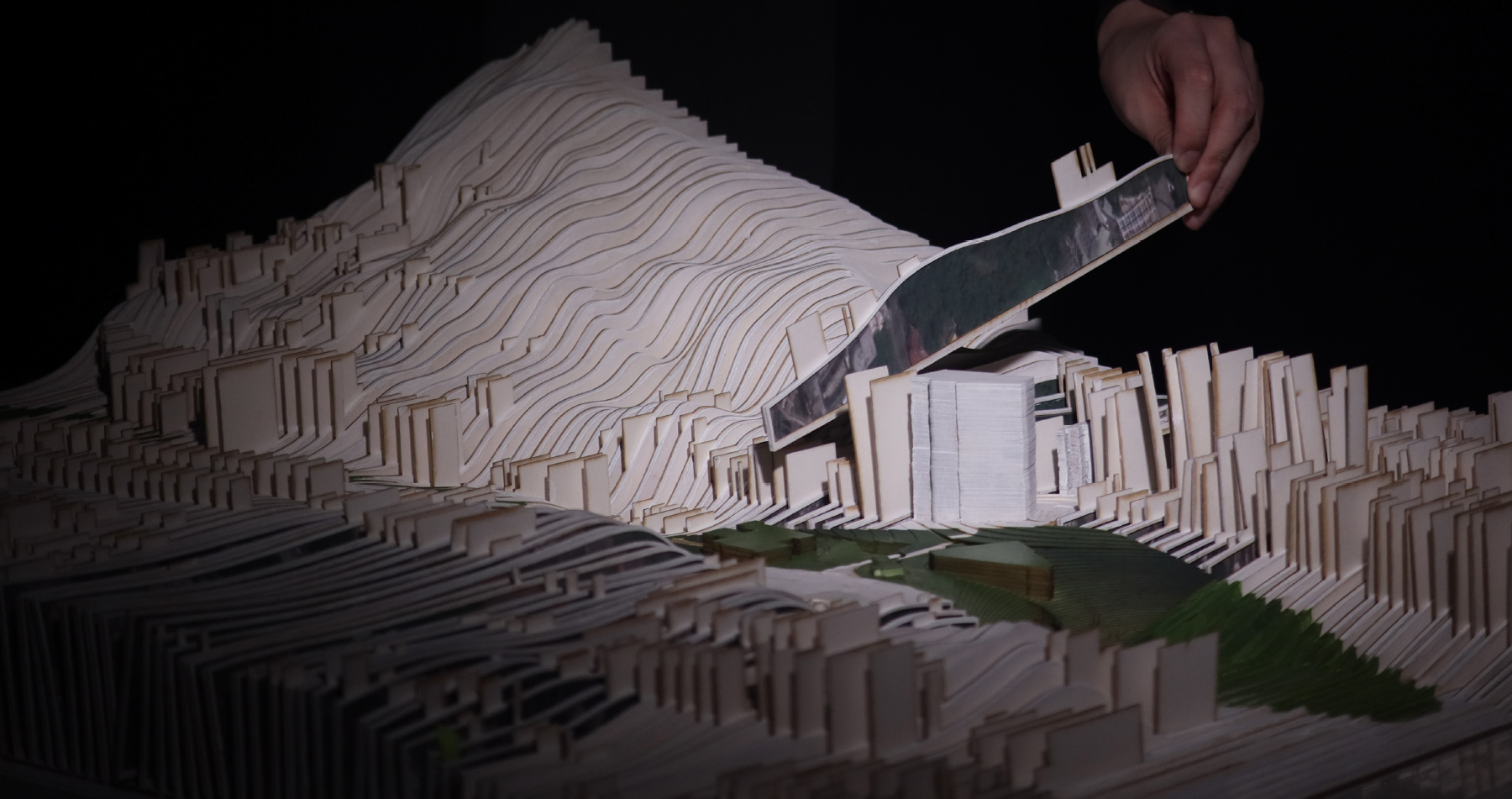
Overview
I live in Beitou.
Beitou is a highly commercialized tourist district, and people often remember it through familiar and fixed images. Amid this wave of tourism, I began to ask: How can we better understand the city beyond these established perceptions? And how might we preserve the overlooked yet meaningful moments of everyday life for the future?
Beginning with Beitou Park, this project reexamines the relationship between place, memory, and architecture, ultimately proposing a contemporary Memorial Landscape that reconnects history, culture, everyday life, and local identity.
Reading Beitou
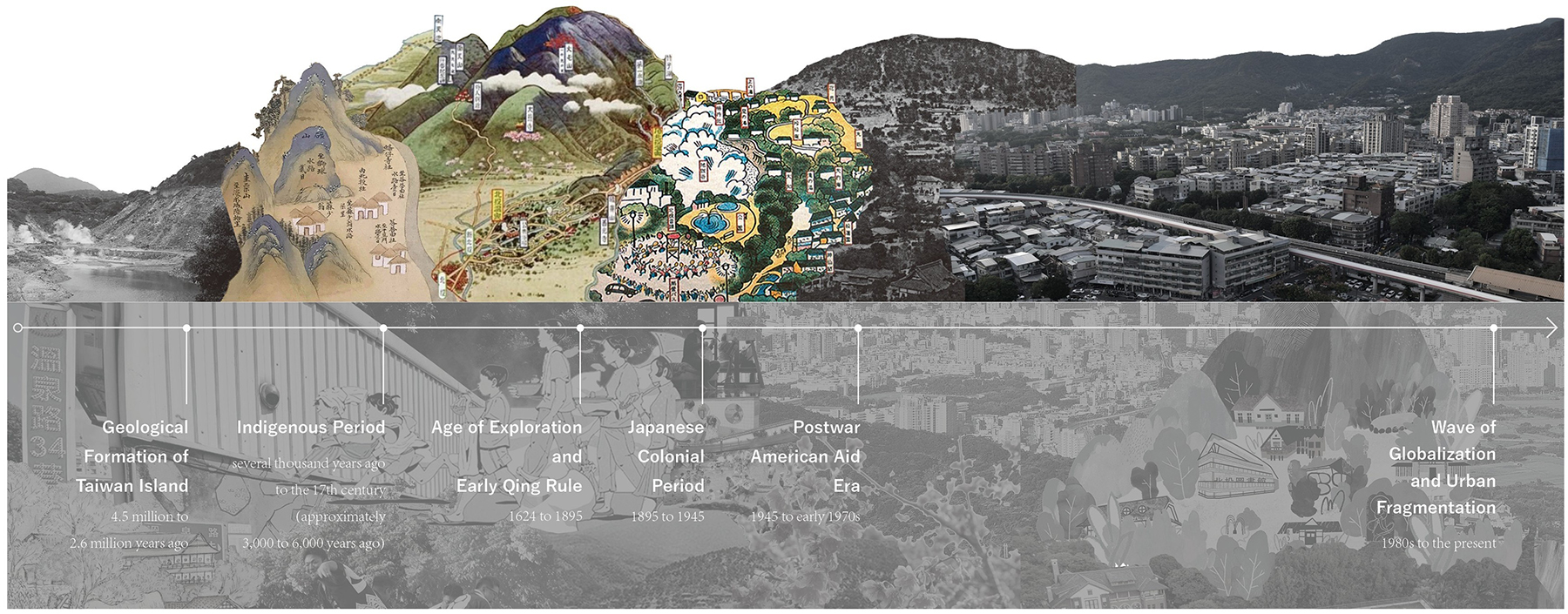
Beitou Park has witnessed the city's development for over a century, and I came to understand it as the core of Beitou's collective memory.
The Beitou Park we see today is a text accumulated over more than a hundred years. Carrying the history and culture of Beitou, it can be understood as an Island of Memories. Within this island, subtle changes and enduring traces accumulate across both material and temporal dimensions. With its distinctive landscape, materials, historical layers, and cultural identity, the site can be understood as a living entity with its own cycles of transformation.
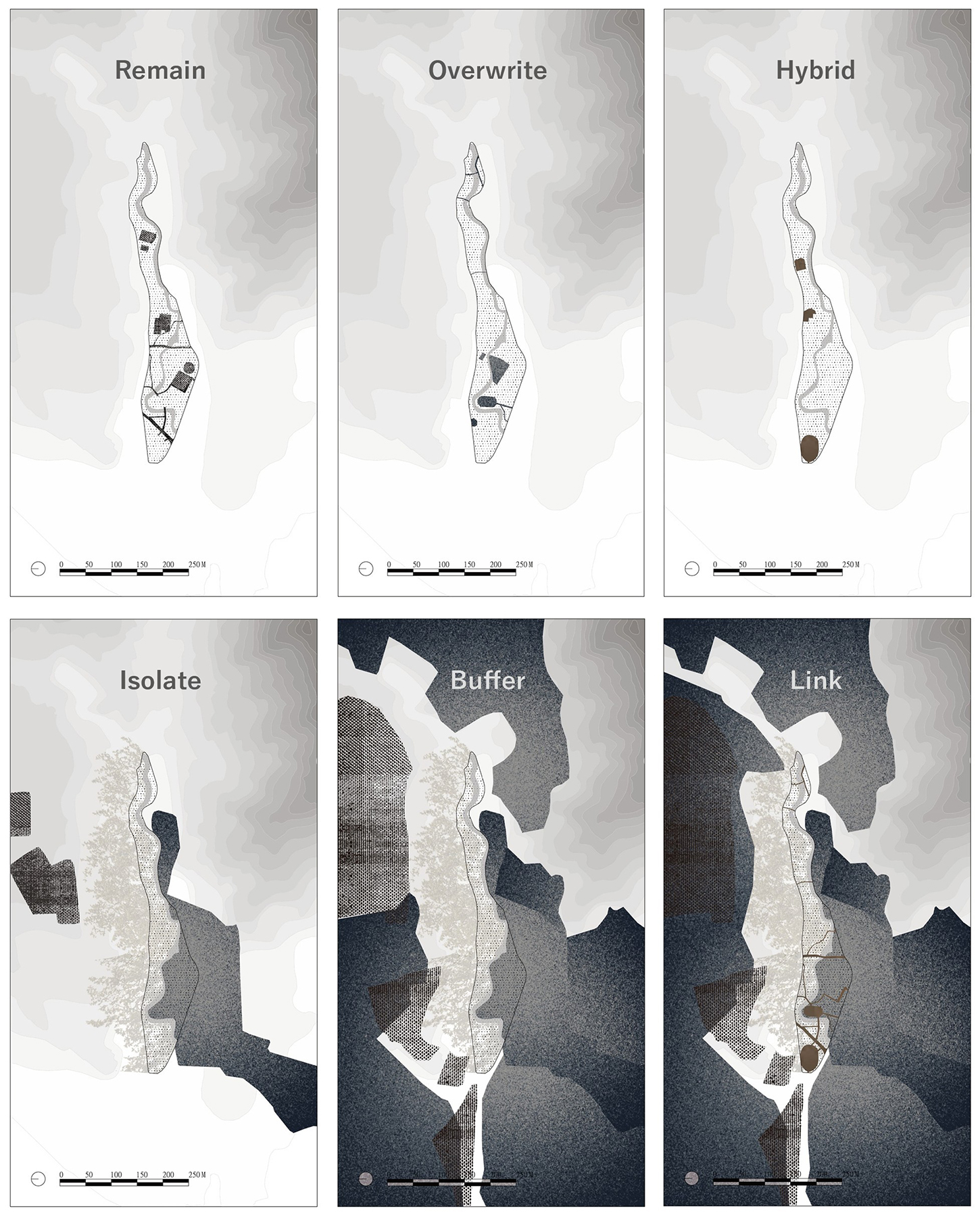
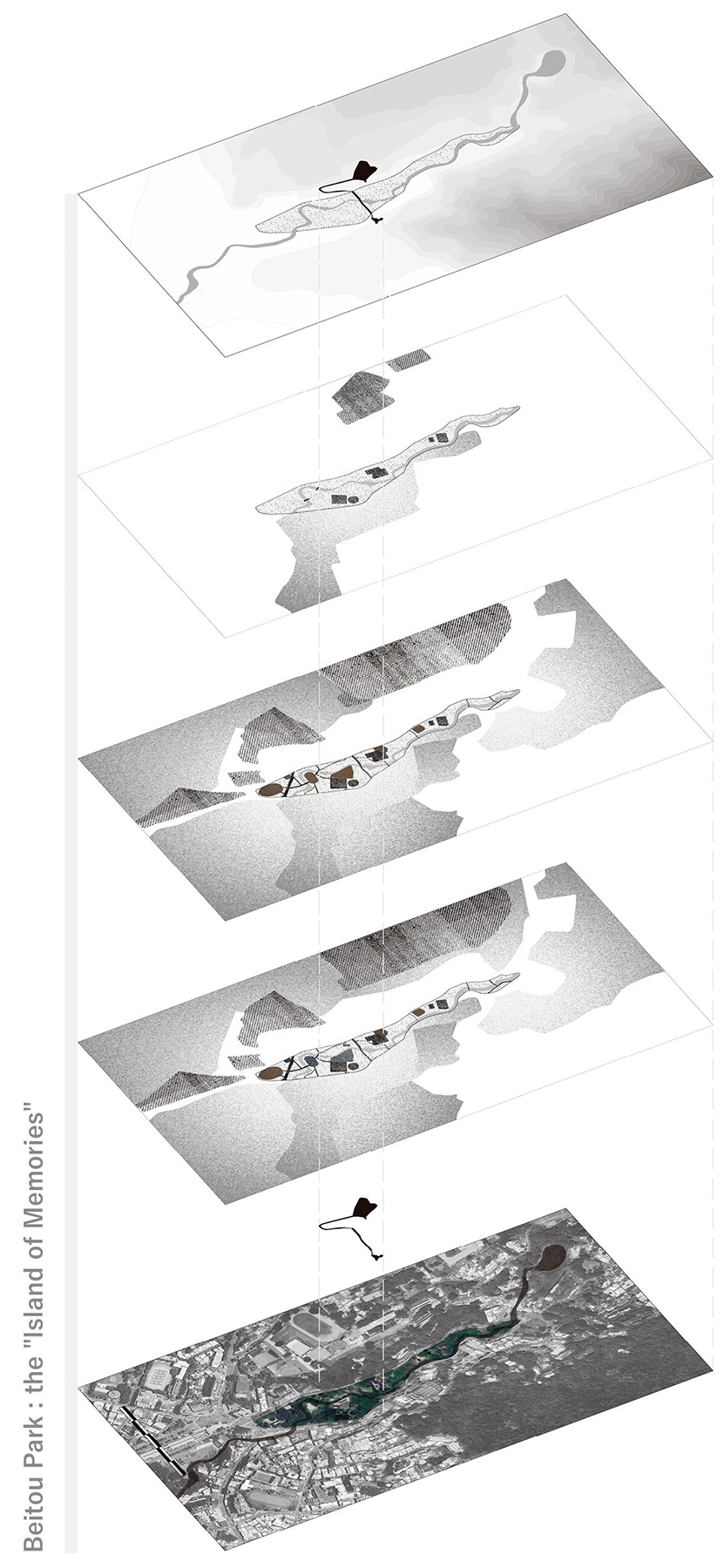
The unique natural conditions of Beitou Park, together with its century-old cultural landscape, have formed an irreplaceable texture. I describe this condition as a Thick Field—a place where layers of nature, history, and everyday life continue to coexist.
Over time, the island has continued to shape—and be shaped by—its surrounding environment. The boundaries between Beitou Park, Huangxi River, and the adjacent urban fabric have gradually softened, while differences in elevation have diminished. North–south connections through the park have become increasingly prominent, creating a network of short paths that both respond to contemporary patterns of movement and reveal the site's accumulated layers of history.
These paths are more than circulation; they offer a way of reading the thickness of the site.
Thick Field & Memorial Landscape

History, culture, memory, and emotion are never static—they continue to evolve over time.
Yet when I reexamined Beitou's existing memory carriers, such as museums, monuments, and exhibition spaces, I found that many had become institutionalized, fragmented, and fixed in perspective. Rather than evolving alongside the city, they often present isolated narratives, much like contemporary hashtags—capturing fragments while losing the depth of place.
This led me to ask: Beyond institutional collections and exhibitions, how else might a city's history, culture, memory, and emotion be carried forward? What might a contemporary carrier of memory look like?

I categorized cultural memory carriers into five types: containers of public knowledge, preserved spaces that extend beyond textual and visual records, community spaces that support local culture, commemorative spaces that convey shared meanings, and finally, city museums that allow people to experience both the tangible and intangible stories of a place through their own bodies and movement.
This final type is largely absent in Beitou, and forms the basis of my proposal: the Memorial Landscape.
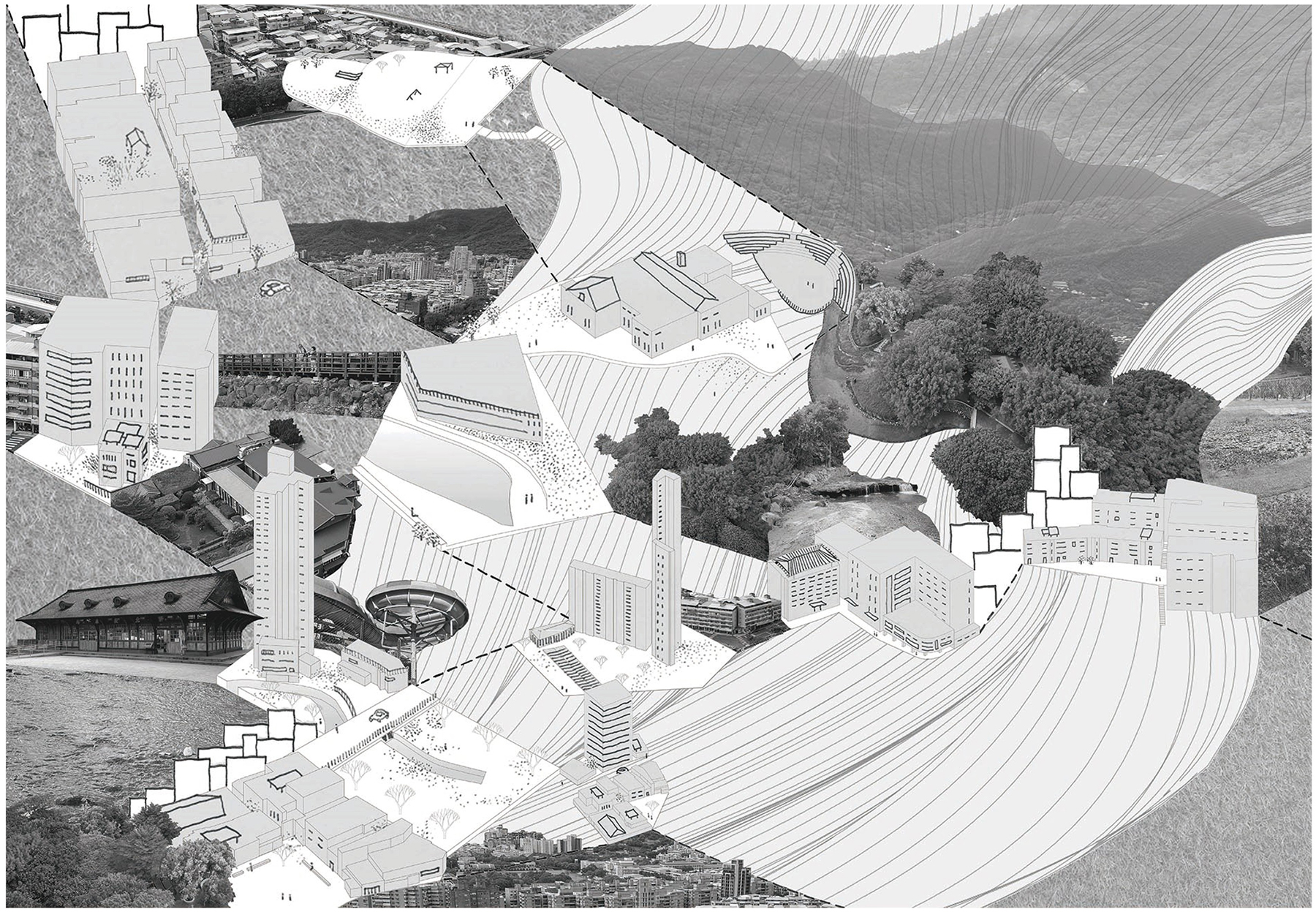
Rather than merely collecting and displaying information, the Memorial Landscape both collects and recalls. It preserves not only knowledge, but also the emotions, everyday life, and spirit of a place, allowing culture, memory, and daily experience to remain intertwined and continue evolving over time.
Design Development
01. Axis
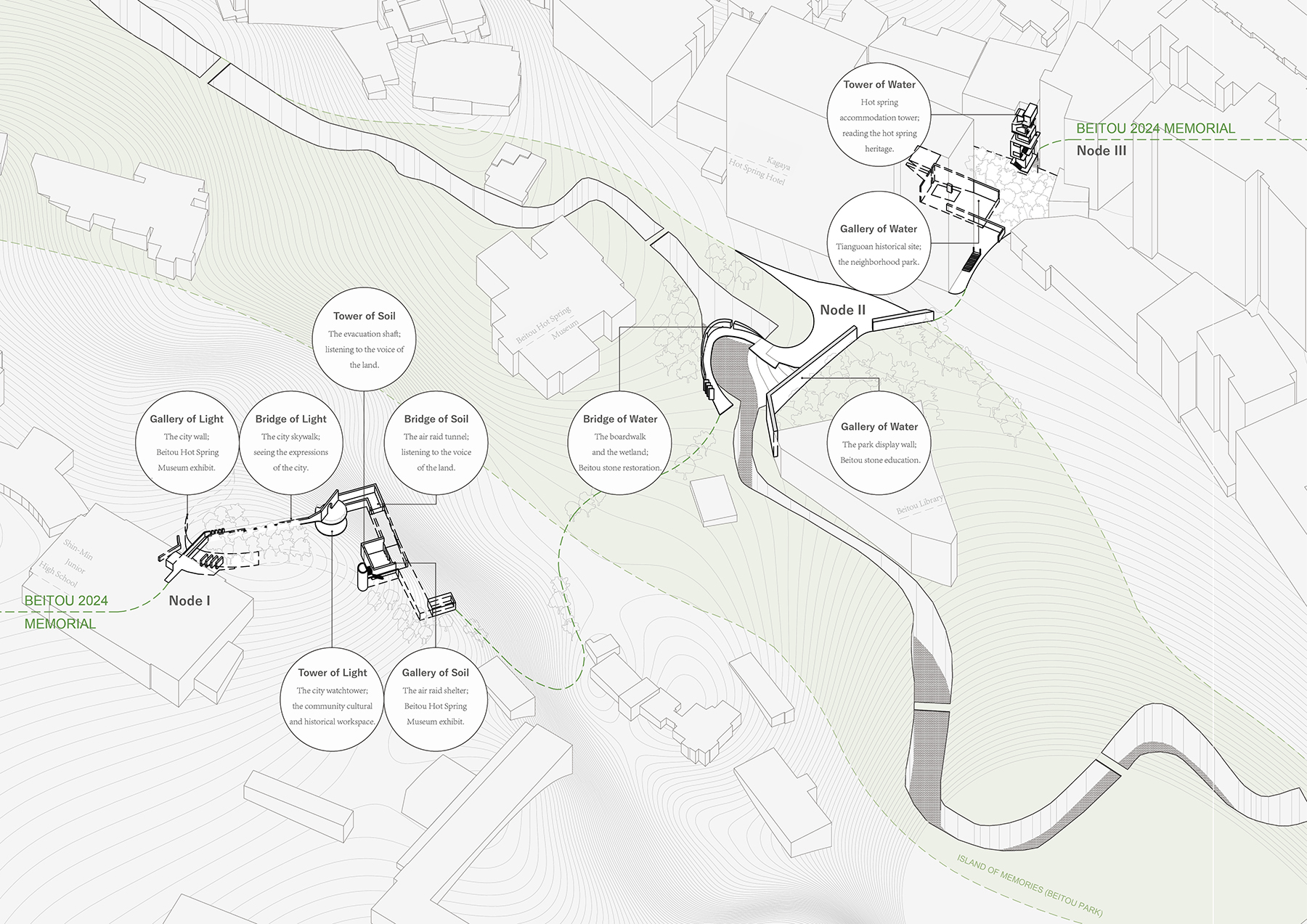
I selected a broad cross-section along the main axis of Beitou Park as the project site, connecting the Children's Amusement Park, Beitou Park, and the former Tiangouan site from north to south.
This section represents both a slice of contemporary urban life and the richest layer of the Island of Memories. Together, these three sites form a continuous Memorial Landscape, revealing the accumulated thickness of the site while reconnecting nature, community, and local memory.
02. Node I – Beitou Children's Amusement Park
Originally built as an extension of the Japanese-era public bathhouse, the Beitou Children's Amusement Park was the first amusement park in Taiwan designed specifically for children. Beneath the site lies a 41-meter-long air-raid shelter dating from the Japanese colonial period. Both were auxiliary spaces whose original roles gradually disappeared over time, leaving this part of the city without a clear identity.
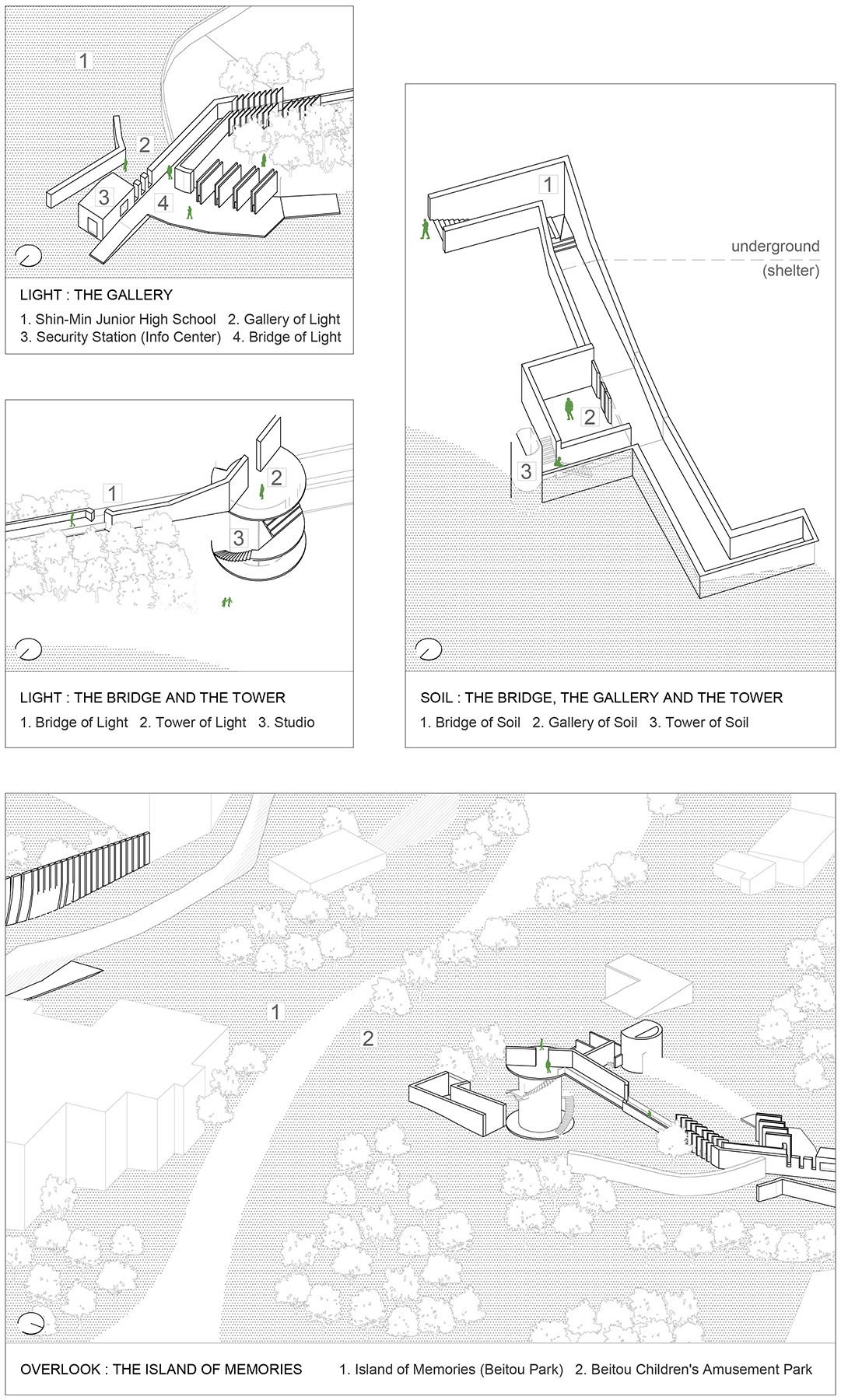
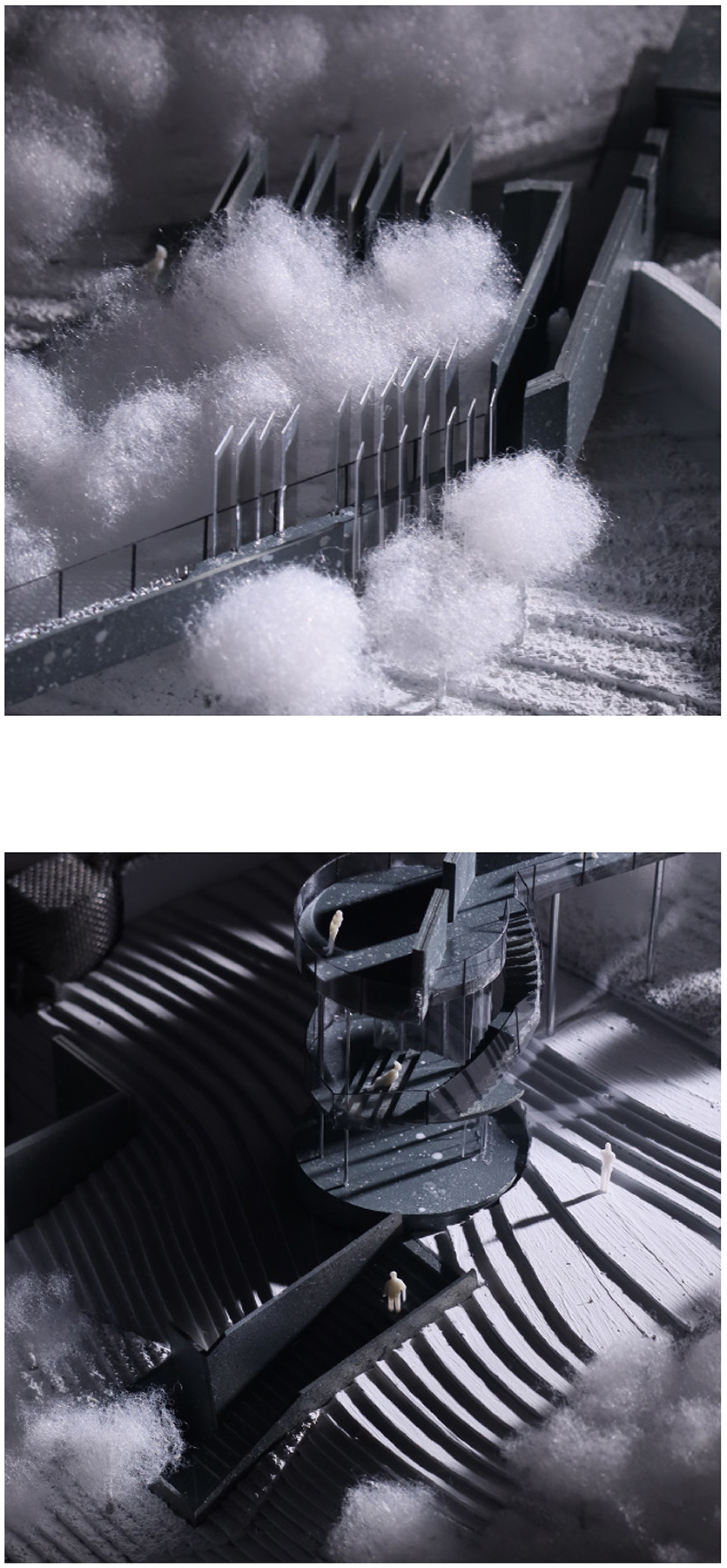
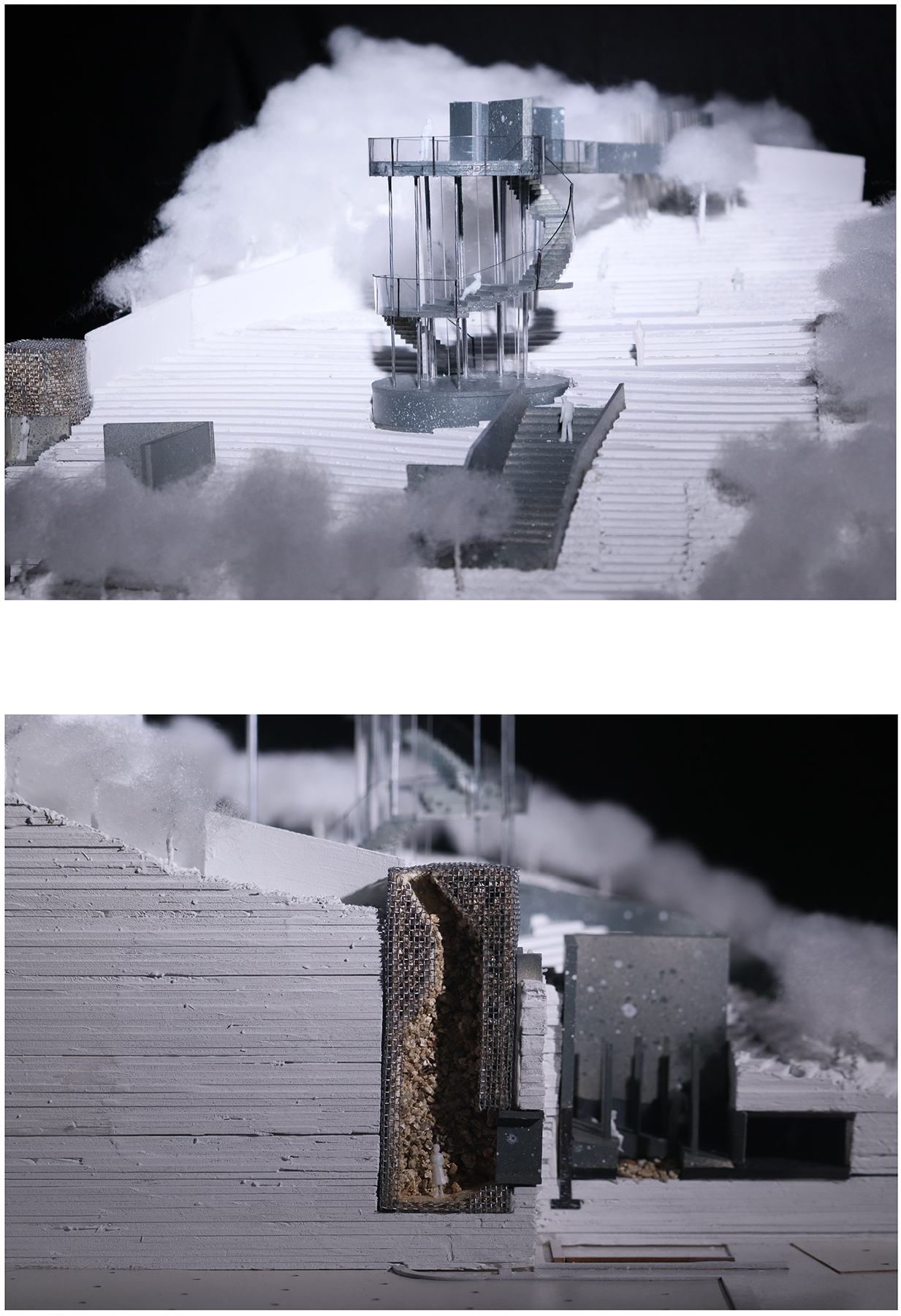
The proposal reimagines the site as an annex to the Beitou Hot Spring Museum, revealing the relationships between surface and underground, island and surroundings. Existing walls, bridges, and circulation are reorganized; a local history studio is introduced at the former animal enclosure; and parts of the underground structures are reopened, allowing the air-raid shelter to become a medium for reading the site's layered history and memory.
Through these interventions, the project seeks to reconnect the Children's Amusement Park with the Island of Memories while encouraging visitors to experience the identity of Beitou through movement and the body.
03. Node II – Beitou Park
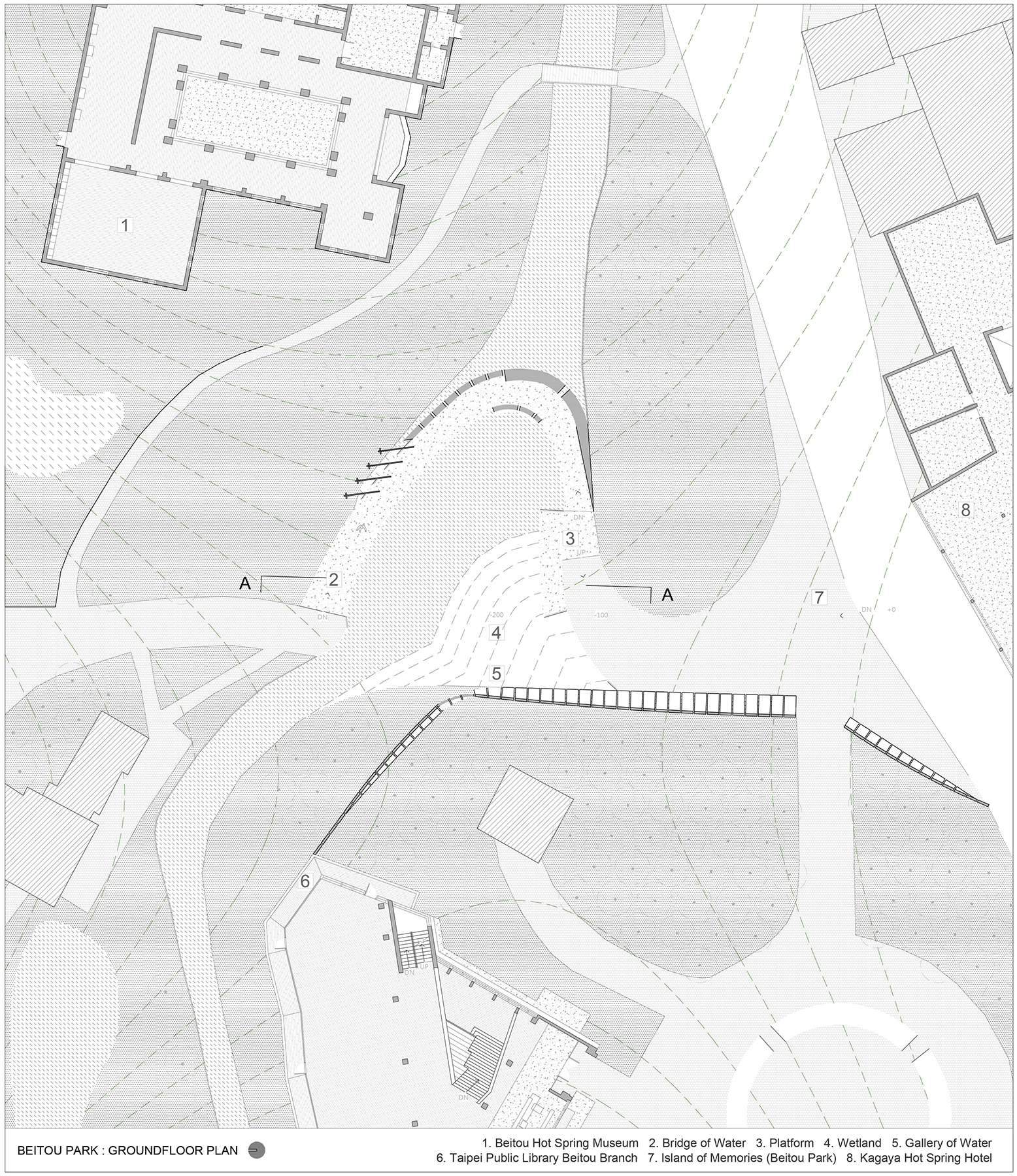
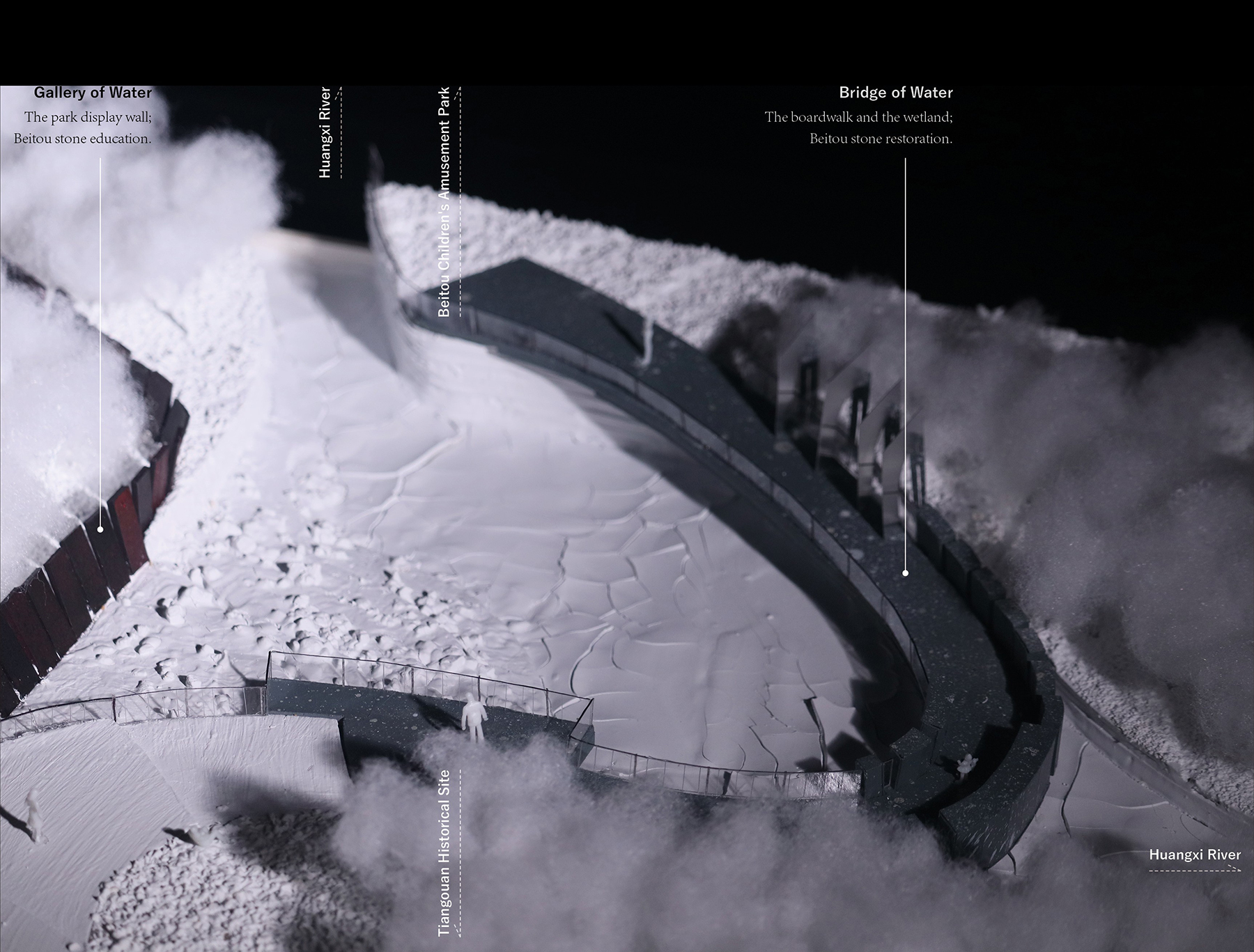
The central portion of the Memorial Landscape connects Huangxi Creek, the Beitou Library, and the Hot Spring Museum.
Rather than treating the existing pedestrian bridge solely as infrastructure, the proposal recognizes Huangxi Creek and Hokutolite as opportunities for design. One path restores the relationship between the island and Tiangouan, while another strengthens the interaction between people and the creek, extending from Tiangouan to the water before returning to the lawn in front of the museum.
These new routes not only reflect contemporary patterns of movement but also restore historical relationships across the site. By extending the creek's western edge, they create opportunities for Hokutolite minerals and sulfur-rich water to accumulate, allowing visitors to observe the ecology of Huangxi Creek while reading the site's layered landscape.
04. Node III – Tiangouan Historical Site
Tiangouan was the first privately operated Japanese-style hot spring inn in Beitou and marked the beginning of the area's hot spring industry. Today, only fragments remain, including stone steps, stone columns, mature trees, and portions of the original brickwork. Surrounded by newer developments, the site has gradually lost its relationship with Huangxi Creek, the Island of Memories, and the historical hot spring network.
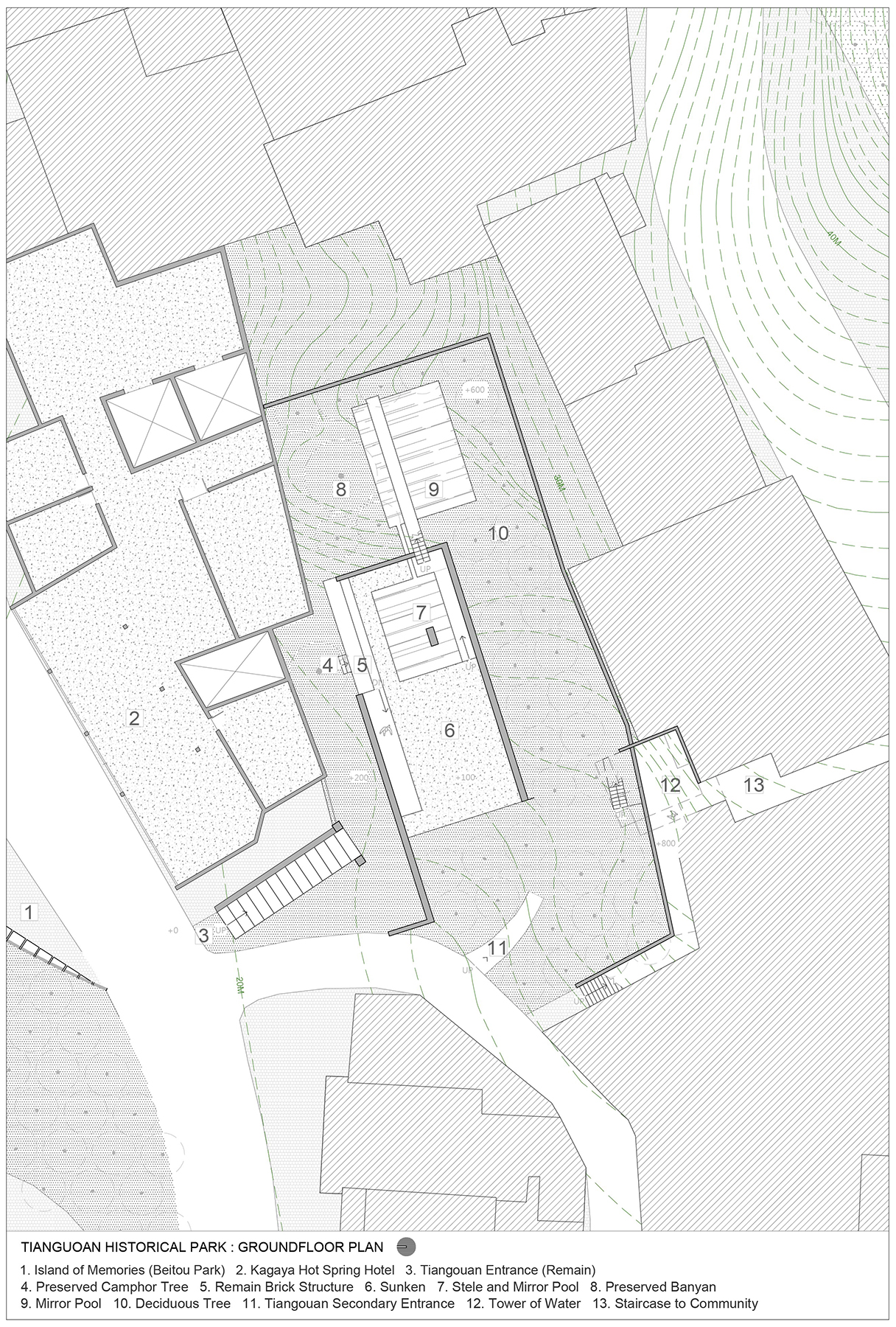
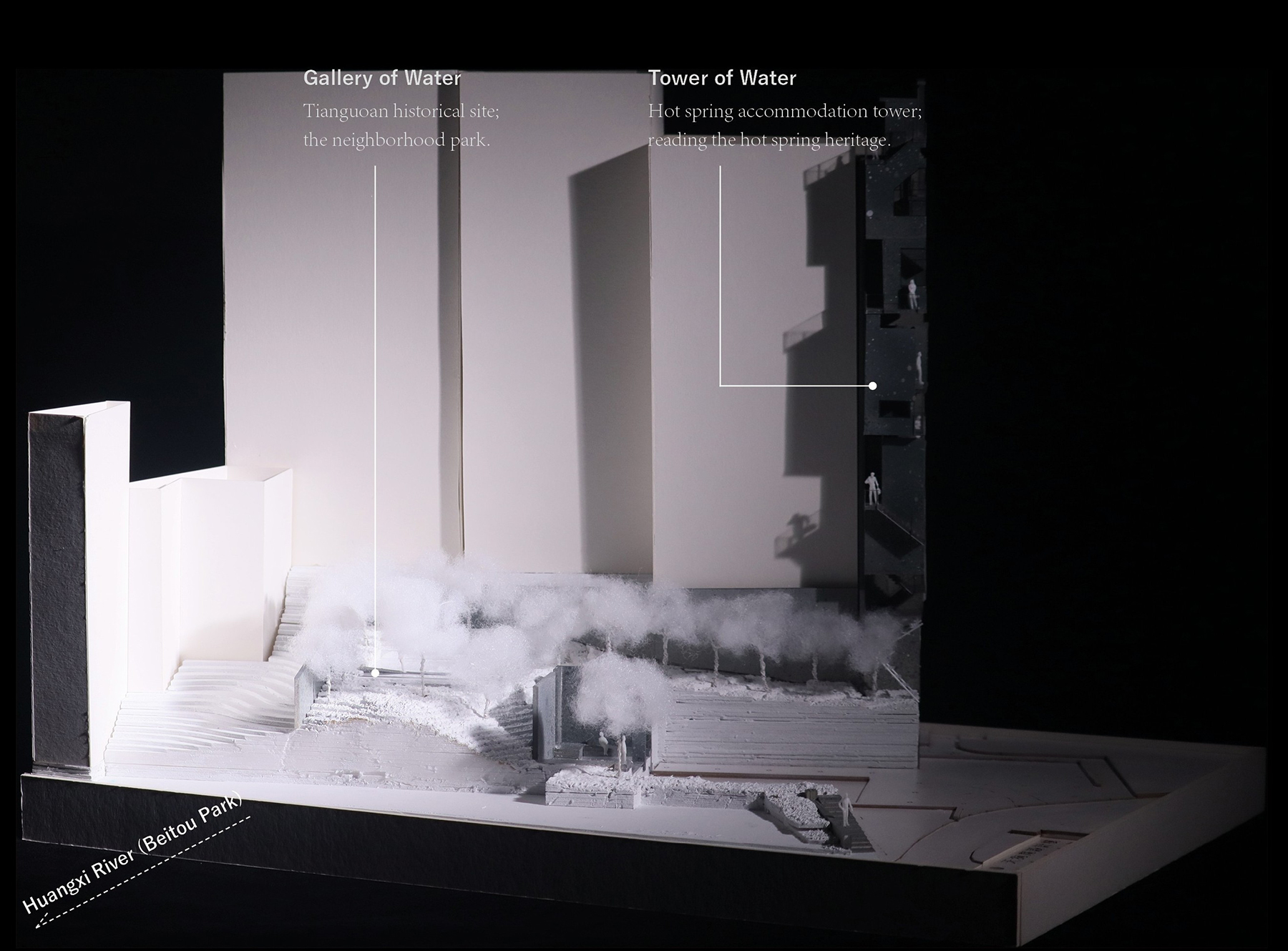
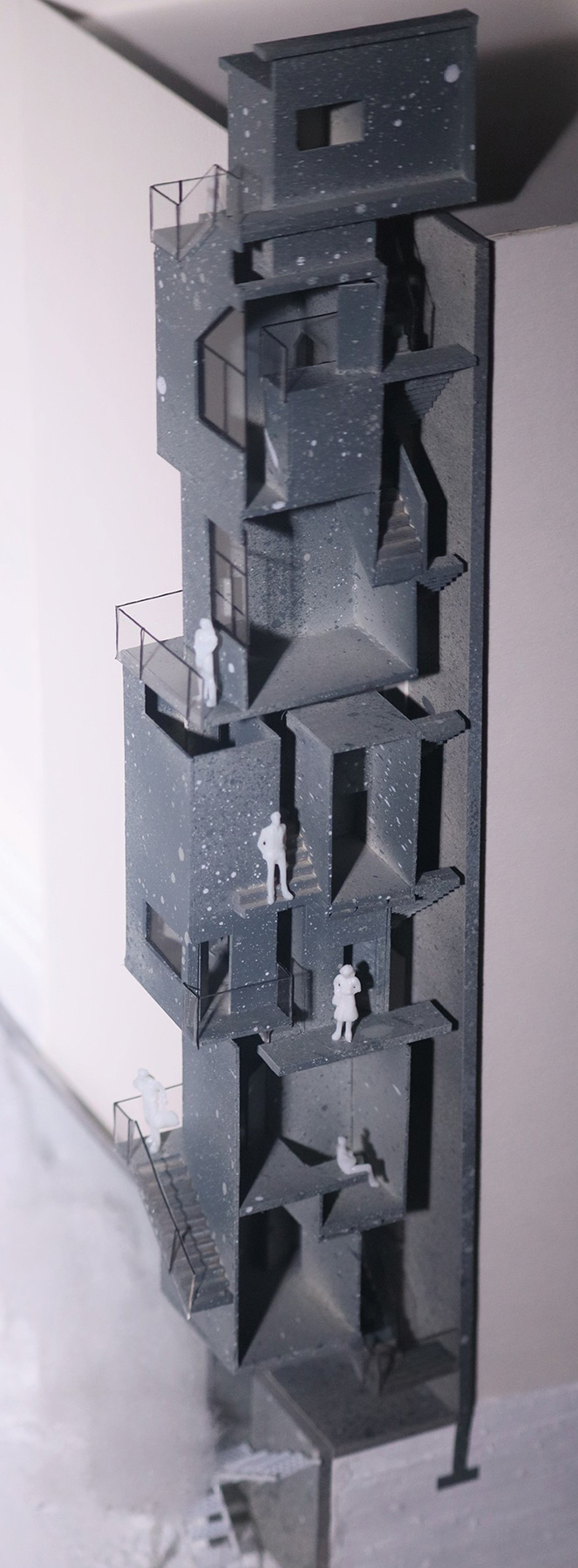
Following the original spatial organization of Tiangouan, the proposal restores the historic sequence of arrival through the stone steps and re-establishes layers of memory using a long wall, century-old camphor trees, surviving brick structures, a reflecting pool, and the footprint of the former main house. A grid of trees overlays the park, serving as a reference for reading the site's historical traces while transforming the monument park into a neighborhood park.
The abandoned seven-story stair tower at the southern edge of the site is adapted into a vertical hot spring accommodation tower, establishing a dialogue between the historic Tiangouan inn and the contemporary Kagaya Hotel. Looking toward Huangxi Creek and across to the Children's Amusement Park, the tower becomes a place from which visitors can perceive the site's thickness and reconnect with the Island of Memories.
Design Proposal
Rather than designing a memorial building, this proposal envisions a contemporary Memorial Landscape. It seeks to re-establish the relationship between people, place, and memory, allowing commemoration to exist not only as the preservation of the past, but as an experience embedded in everyday urban life. Through Collect and Recall, local culture, lived experience, and emotional memory continue to accumulate, be reinterpreted, and extend into the future.